
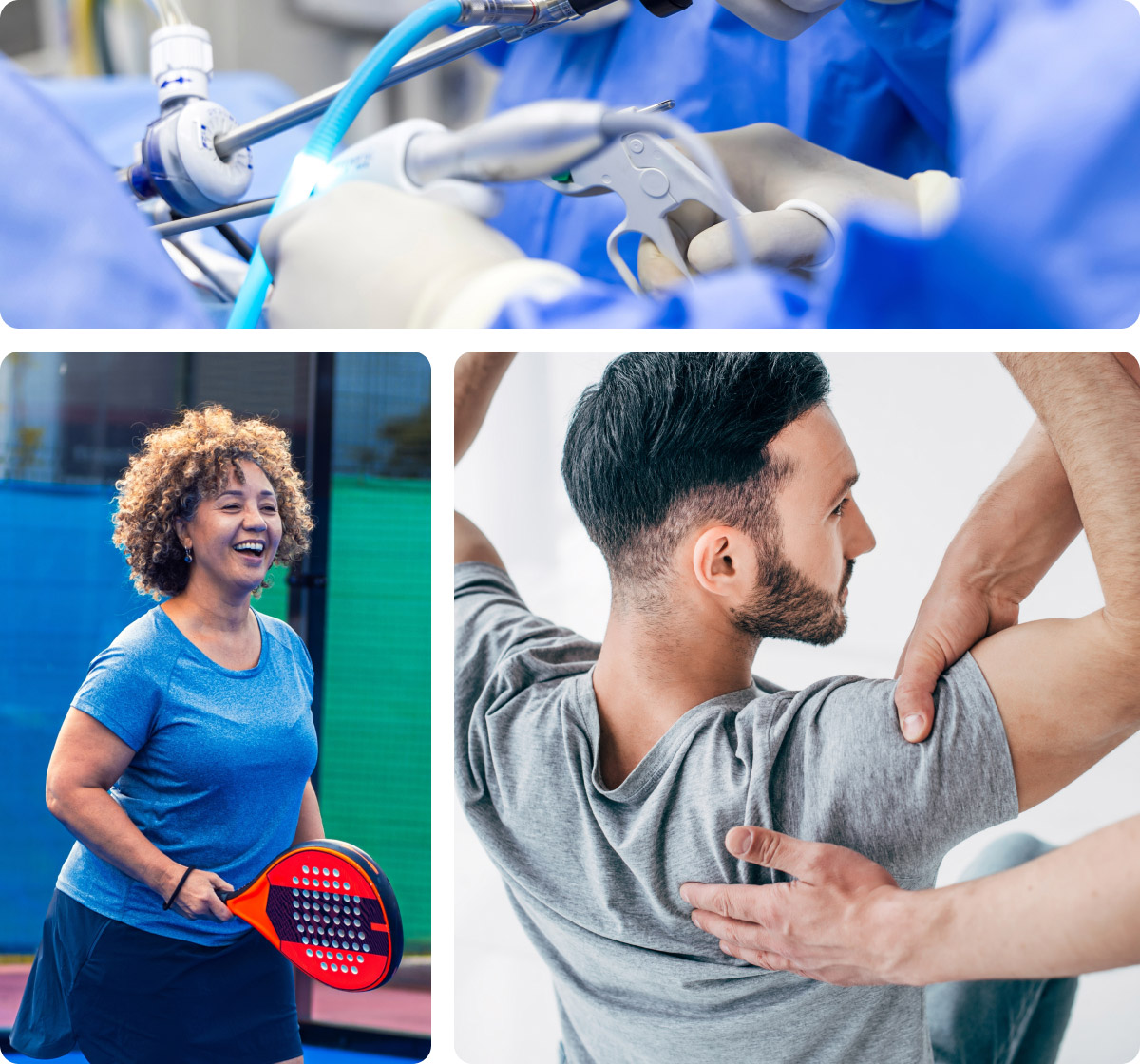
Shoulder arthroscopy is a minimally invasive procedure that allows the surgeon to evaluate and treat conditions in the shoulder joint using a small camera and specialized instruments. The arthroscope provides high-definition images of cartilage, tendons, ligaments, and other structures, allowing for precise diagnosis and treatment.
Through additional small incisions, the surgeon can repair torn tissue, remove inflamed or damaged structures, or smooth joint surfaces. Arthroscopy is commonly used to treat conditions such as rotator cuff tears, labral injuries, impingement, and other degenerative or traumatic shoulder problems.
Because the procedure is performed through small incisions rather than open surgery, patients typically experience less postoperative discomfort, smaller scars, and a faster recovery.
When We Would Recommend This Treatment
Shoulder arthroscopy is recommended when conservative treatments such as rest, medications, physical therapy, or injections do not relieve pain or restore function. Many patients pursue this option after ongoing symptoms interfere with daily activities or athletic performance.
The procedure is often used to address persistent pain, weakness, instability, or reduced range of motion caused by overuse, sports injuries, degenerative changes, or trauma such as falls or dislocations.
In addition to diagnosis, arthroscopy allows surgeons to repair tendons or ligaments, remove bone spurs, and treat conditions like impingement or bursitis that have not improved with non-surgical care.
What to Expect
After shoulder arthroscopy, patients may experience mild swelling, soreness, or stiffness in the first few days, which is typically managed with ice, medication, and temporary activity modification. A sling may be used briefly to support the shoulder as healing begins.
Recovery varies depending on the condition treated and the extent of the procedure. Physical therapy is often recommended to restore range of motion, rebuild strength, and improve shoulder function.
Most patients gradually return to daily activities as healing progresses, although full recovery may take several weeks to months depending on the procedure performed.
Our Top-Rated Shoulder Providers













Three Common Conditions
Rotator Cuff Tears
Arthroscopic repair of torn tendons requires careful care to protect the repair and regain strength.
Shoulder Impingement or Bursitis
Removal of inflamed tissue via arthroscopy relieves pain; structured rehab prevents recurrence and restores range of motion.
Labral Tears or Bone Spurs
Arthroscopy smooths joint surfaces and repairs the labrum; recovery focuses on reducing pain and preventing stiffness.
Frequently Asked Questions
What is shoulder arthroscopy and how is it performed?
Shoulder arthroscopy is a minimally invasive surgical procedure used to diagnose and treat problems inside the shoulder joint. During the procedure, a surgeon makes a few small incisions around the shoulder and inserts a tiny camera (arthroscope) that projects images onto a screen. This allows the surgeon to clearly view the joint and guide miniature instruments to repair damaged tissues, remove bone spurs or loose cartilage, and correct issues like rotator cuff tears, labral tears, or shoulder impingement. Because the incisions are small, recovery is typically faster and less painful compared to traditional open surgery.
What medications will I be given?
Pain control after shoulder procedures may involve a combination of medications to keep you comfortable during the early stages of recovery. These can include anti-inflammatory medications to reduce swelling and discomfort, as well as short-term prescription pain medication if needed. Your provider will recommend the most appropriate medications for your situation and review how and when they should be taken. Always follow your provider’s instructions and consult your care team before adding any additional medications.
How long will I need to wear a sling?
Most patients wear a sling or immobilizer for several days to weeks to protect the repair. The duration depends on the procedure performed and the surgeon’s protocol. During this time, patients may remove the sling briefly to perform elbow, wrist, and hand exercises to prevent stiffness. Do not lift heavy objects or reach behind the back until cleared. Gradually transition out of the sling as recommended and begin active shoulder exercises under supervision.
When can I return to work and activities?
Returning to work will depend on the extent of the repair. Minor procedures may allow patients to return to desk work within days, while more complex repairs can take several months before patients can resume overhead activities. Surgeons and physical therapists will guide each patient through each phase of rehabilitation and decide when it is safe to drive, lift, and return to sports. It is important to complete the full course of therapy and avoid rushing back, as premature activity can jeopardize the repair.