
Harness Your Body’s Healing Power
Orthobiologics are regenerative treatments that use cells and proteins from your own body, such as platelets and stem cells, to enhance the healing process. These therapies can reduce inflammation, promote tissue repair, and serve as a bridge between non-operative and surgical care options.
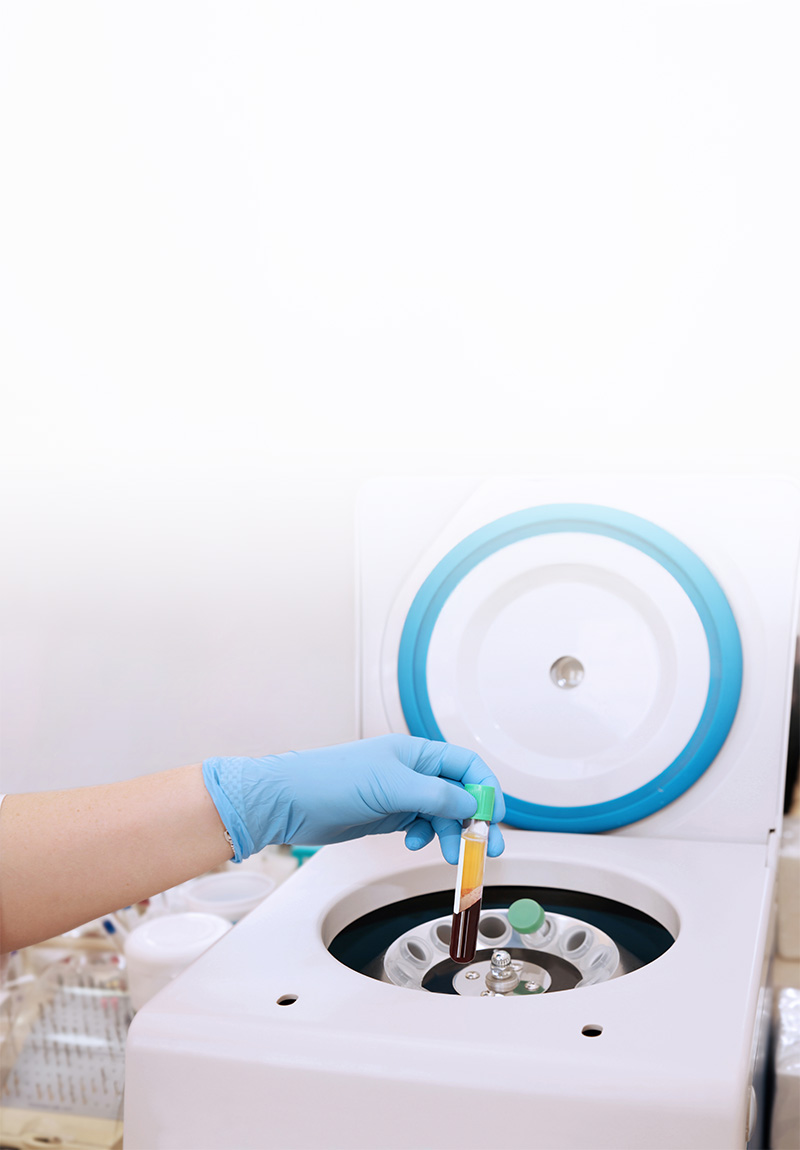
At OrthoNY, we offer platelet-rich plasma (PRP), bone marrow aspirate concentrate (BMAC), and Lipoaspirate. PRP is made by spinning a small blood sample in a centrifuge to isolate growth factors, which are then injected into injured tendons or joints to stimulate recovery. BMAC involves collecting stem cell-rich marrow from your pelvic bone to support the regeneration of cartilage, bone, and soft tissues. Lipoaspirate involves isolating adipose derived stem cells along with various growth factors to support recovery. These minimally invasive treatments are performed under local anesthesia, either in our office or surgical center. Since the biologic material comes from your own body, there is a very low risk of adverse reaction. Orthobiologics are often recommended when conservative options have failed, but before considering surgery, or as a complement to surgery to support healing. The specialists at OrthoNY use image guidance for accurate injection placement and pair biologic therapy with personalized rehabilitation to maximize results. Whether you’re managing early arthritis, tendonitis, or a sports injury, orthobiologics may give your body the boost it needs to recover naturally.
5 Benefits of Receiving Orthobiologic Treatments at OrthoNY
- Utilizes your own cells and proteins to stimulate natural healing
- Minimally invasive procedure performed in the clinic or surgery center
- May reduce need for pain medications by addressing the source of pain
- Precise ultrasound-guided injections for accuracy and safety
- Integrated with physical therapy to enhance recovery and function
Understanding Orthobiologic Treatments
OrthoNY offers advanced therapies like stem cell treatments and platelet-rich plasma (PRP) to help patients heal. These are part of a growing field called orthobiologics, which harnesses the body’s natural healing power to treat injuries. The video highlights how these minimally invasive options are performed and the benefits they provide for patients seeking natural options to aid their recovery.
Patient Testimonials
I have had a very good experience every time I have seen Dr. LeVasseur he explains to me the options I have to help with my knee pain

carol countryman
June 5th 2026
carol countryman
June 5th 2026
Awesome
George Smith
June 5th 2026
George Smith
June 5th 2026
Delightful and professional right as he came in the door. I am very comfortable with him and the shots he gave my painful thumb joint are working so far!!! A+
Patti Conroy
June 5th 2026
Patti Conroy
June 5th 2026
Dr. Okoli took the time to explain everything thoroughly and addressed all of my concerns. I’ve been a patient of his for well over a year and highly recommend him.
Wendy Vavrina
June 5th 2026
Wendy Vavrina
June 5th 2026
I searched orto ny doctors for my problem,and chose dr. Boyd and very happy I did. Both Dr. Boyd and his assistant Whitney extremely nice and easy to talk with and Dr …
John Rutkey
June 5th 2026
John Rutkey
June 5th 2026
Chelsea Blaney delivered professional and caring service.
A Welty
June 5th 2026
A Welty
June 5th 2026
Love pa Owen he has a great personality and makes you feel great. He explains everything to you clearly.
mary pailley
June 5th 2026
mary pailley
June 5th 2026
The staff was great.
MockingBird
June 5th 2026
MockingBird
June 5th 2026
Melissa Manus is the best. She always answers any questions and concerns I may have. My son has received the best care from OrthoNY!
Beth Haverly
June 5th 2026
Beth Haverly
June 5th 2026
His office has been great I had rotator cuff surgery and right from the beginning everyone has been very helpful. Dr. LaRosa took the time to explain everything to me even after …
Stacy Peek
June 5th 2026
Stacy Peek
June 5th 2026
Frequently Asked Questions
What are orthobiologics?
Orthobiologics is an umbrella term for biological substances that work with the body’s natural healing processes to repair injured tissues. These include concentrated platelets (PRP), stem cells from bone marrow or adipose tissue, and other growth factors or cytokines. In platelet-rich plasma therapy, the blood is drawn and spun in a centrifuge to create a concentrated solution rich in platelets and growth factors that stimulate cellular repair. Bone marrow aspirate concentrate (BMAC) involves harvesting bone marrow, usually from the pelvis, and isolating progenitor cells that have the potential to aid in the regeneration of bone, cartilage, tendon, and ligament tissue. When injected into a damaged area, these biologic preparations reduce inflammation, recruit healing cells, and may accelerate the repair of chronically injured tissues. Orthobiologics are part of the broader field of regenerative medicine and are being studied for their ability to reduce pain, improve function, and potentially delay or obviate the need for surgery.
What conditions can be treated with orthobiologic injections?
Orthobiologic therapies have a wide range of applications. They are often recommended for chronic overuse injuries that have failed to respond to rest and conventional therapies, such as tendinopathies of the elbow (tennis elbow), knee (jumper’s knee), and Achilles tendon, as well as plantar fasciitis. They may help in early to moderate osteoarthritis of the knee, hip, ankle, or shoulder by reducing inflammation and stimulating cartilage repair. Muscle strains, partial ligament tears, and certain meniscus or labral injuries can also respond to biologic injections. In addition, orthobiologics are sometimes used in combination with surgery. They can be applied during rotator cuff repairs, ACL reconstructions, or fracture fixations to further enhance the healing of the surgical repair. It’s important to note that these treatments are not a cure-all, and severe degenerative disease or complete tendon ruptures usually require surgery. Each physician will assess whether biologic therapy is appropriate based on imaging, the chronicity of the injury, activity levels, and overall health.
What is the procedure like?
These treatments are typically performed in a clinic or ambulatory surgical setting and take under an hour. For PRP therapy, a nurse draws a small volume of blood. The blood is spun in a centrifuge that separates the plasma and platelets from red and white blood cells. The resulting platelet-rich solution is then collected in a syringe. For BMAC, local anesthesia is given to the patient over the posterior pelvis (iliac crest). A special needle is inserted into the bone marrow cavity to withdraw a small amount of marrow. This aspirate is processed to concentrate stem cells and growth factors. Before injection, the target area (tendon, ligament, or joint) is cleaned and anesthetized. The physician uses ultrasound or fluoroscopy to guide the needle precisely into the damaged tissue. After the injection, patients may feel increased pressure or soreness for a few days. Patients can return home immediately and usually resume light activities within a day or two. We generally advise avoiding anti-inflammatory medications for a short period, as they may blunt the biologic response, and recommend a gradual return to exercise under the supervision of a physical therapist.
How long does it take to see results?
One of the most important aspects of orthobiologic therapy is patience. Unlike medications that mask pain or surgery that immediately corrects structural problems, biologic injections stimulate the body’s natural healing processes. It takes time for cells to proliferate, remodel tissue, and reduce inflammation. Some patients notice a reduction in pain and an increase in function within four to six weeks. Others may not experience appreciable improvements until 8 to 12 weeks after treatment, with continued progression for six months or longer. The timeline varies depending on the severity and chronicity of the injury, age, overall health, and adherence to post-injection activity modifications. In some cases, multiple injections spaced several weeks apart are recommended to achieve optimal results. We frequently pair biologic therapies with an individualized rehabilitation program, consisting of stretching, strengthening, and biomechanical training, to maximize healing.
Are orthobiologic treatments safe?
Because orthobiologics use autologous (the patient’s own) blood or bone marrow, they carry a very low risk of allergic reaction or disease transmission. However, there are still potential side effects. It is common to experience temporary soreness, swelling, or bruising at the injection or harvest site. Infection is rare but possible, although we perform the procedure under sterile conditions and may prescribe prophylactic antibiotics for certain patients. With bone marrow aspiration, there can be residual discomfort in the pelvis for a few days. Rarely, injury to nearby nerves or blood vessels can occur. Most complications can be managed conservatively, and serious adverse events are uncommon. It is important to disclose all medications and supplements to the provider, as blood-thinning agents may need to be held before the procedure.
Does insurance cover orthobiologic therapy?
Insurance coverage for regenerative therapies is evolving. At present, many carriers categorize PRP and BMAC as experimental or investigational because large-scale, randomized controlled trials are still ongoing. As a result, these treatments are often not covered, leaving patients responsible for the cost. Some insurers may cover biologic injections if they are administered as part of a surgical procedure or for specific diagnoses; others may provide partial reimbursement. Our billing team will contact the insurance provider to determine coverage, obtain any necessary documentation, and give an estimate of out-of-pocket expenses. Health savings accounts (HSAs) or flexible spending accounts (FSAs) may be used to pay for orthobiologic therapy. For many patients, the potential benefits justify the investment. We will review all financial options with you before treatment so you can make an informed choice.