
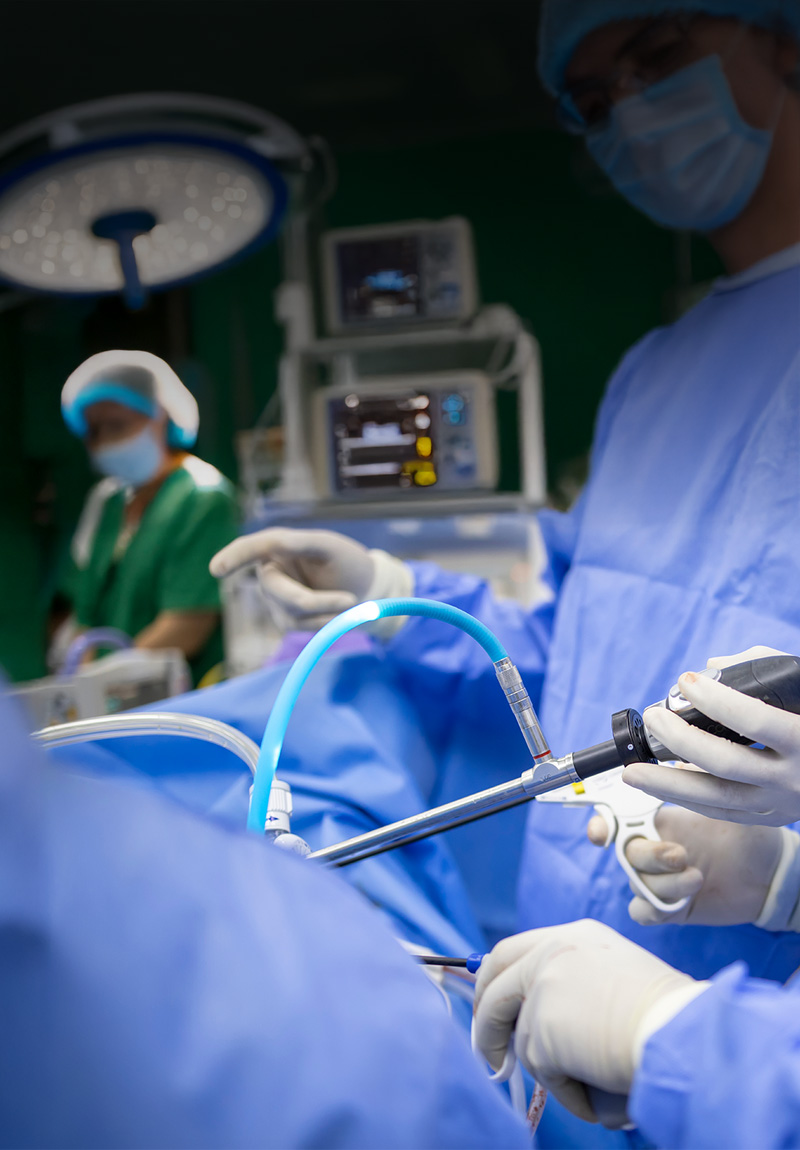
Minimally Invasive Solution for Improved Surgical Outcomes
Arthroscopic surgery is a minimally invasive procedure developed as a away to improve surgical outcomes and is used to diagnose and treat problems inside a joint. It involves inserting a small fiber-optic camera and pencil-sized instruments through tiny incisions, allowing surgeons to see inside the joint and make precise repairs without open surgery. Your joints are at the center of everything you do — from climbing stairs and lifting groceries to swinging a tennis racquet or reaching for a glass. When pain or stiffness sets in due to injury or wear-and-tear, even simple daily tasks can become difficult.
At OrthoNY, our board-certified and fellowship-trained orthopedic surgeons use arthroscopy to perform targeted treatments with minimal disruption to surrounding tissue. This technique is commonly used to address torn meniscus and cartilage, rotator cuff tears, labral injuries, joint impingement, and loose bodies. Because the incisions are so small, arthroscopic surgery results in less trauma, less post-operative pain, minimal scarring, and a quicker return to activity. Most procedures are performed on an outpatient basis in our advanced surgery centers, so you can begin your recovery at home the same day.
We start with a detailed evaluation and imaging to determine whether arthroscopy is the best solution for your condition. If surgery is recommended, our team will walk you through every stage, from pre-operative planning to recovery with support from our experienced physical therapists. Whether you’re an athlete eager to return to your sport or simply want to move without discomfort, OrthoNY arthroscopic experts are here to help you regain mobility, strength, and confidence in your joints.
5 Benefits of Receiving Arthroscopic Surgery at OrthoNY
- Board-certified and fellowship-trained orthopedic surgeons specializing in minimally invasive joint procedures
- Outpatient surgeries with small incisions result in less pain and scarring
- Due to the smaller incisions, arthroscopic surgery has a lower risk of infection than traditional surgery
- Personalized care plans that include imaging, surgical intervention, and rehabilitation
- Convenient locations across Albany and the Capital Region with state-of-the-art equipment

A Smarter Choice than a Hospital
OrthoNY’s surgery centers are designed specifically for orthopedic care, giving patients a focused alternative to traditional hospitals. Our model emphasizes safety, efficiency, and long-term outcomes.
- AAAHC-accredited centers meeting top safety standards
- 80% of U.S. surgeries performed in outpatient centers
- Lower costs than hospital-based orthopedic surgery
- Minimally invasive surgery by fellowship-trained surgeons
- Faster recovery, shorter waits, and lower infection risk
If surgery is your next step for care, ask your provider if an ASC setting is right for you.
Patient Testimonials
Awesome

George Smith
June 5th 2026
George Smith
June 5th 2026
Delightful and professional right as he came in the door. I am very comfortable with him and the shots he gave my painful thumb joint are working so far!!! A+
Patti Conroy
June 5th 2026
Patti Conroy
June 5th 2026
Dr. Okoli took the time to explain everything thoroughly and addressed all of my concerns. I’ve been a patient of his for well over a year and highly recommend him.
Wendy Vavrina
June 5th 2026
Wendy Vavrina
June 5th 2026
I searched orto ny doctors for my problem,and chose dr. Boyd and very happy I did. Both Dr. Boyd and his assistant Whitney extremely nice and easy to talk with and Dr …
John Rutkey
June 5th 2026
John Rutkey
June 5th 2026
Chelsea Blaney delivered professional and caring service.
A Welty
June 5th 2026
A Welty
June 5th 2026
Love pa Owen he has a great personality and makes you feel great. He explains everything to you clearly.
mary pailley
June 5th 2026
mary pailley
June 5th 2026
The staff was great.
MockingBird
June 5th 2026
MockingBird
June 5th 2026
Melissa Manus is the best. She always answers any questions and concerns I may have. My son has received the best care from OrthoNY!
Beth Haverly
June 5th 2026
Beth Haverly
June 5th 2026
His office has been great I had rotator cuff surgery and right from the beginning everyone has been very helpful. Dr. LaRosa took the time to explain everything to me even after …
Stacy Peek
June 5th 2026
Stacy Peek
June 5th 2026
Easy in, easy check-in Seen on time to see the doctor Dr Flick is A+. He did my shoulder a few years ago and remembers me and my shoulder. He’s just a …
Bill Reinhardt
June 4th 2026
Bill Reinhardt
June 4th 2026
Frequently Asked Questions
What conditions can be treated with arthroscopic surgery?
Arthroscopic surgery is a versatile technique that allows surgeons to address many different problems inside a joint. In the knee, it’s commonly used to trim or repair torn meniscus tissue, smooth frayed cartilage, remove loose bone or cartilage fragments, and treat early arthritis. In the shoulder, it can repair torn rotator cuff tendons, fix labral tears that cause instability or “catching,” treat bursitis, and remove bone spurs that contribute to impingement. Hip arthroscopy is used for labral tears, femoroacetabular impingement, and loose bodies, while elbow, ankle, and wrist arthroscopies can treat ligament injuries, remove inflamed tissue, and smooth cartilage defects. Your surgeon will determine if arthroscopy is appropriate based on the location and nature of your injury.
How is arthroscopic surgery different from traditional open surgery?
Open surgery typically requires a large incision to expose the joint, which means cutting through muscle and other healthy tissue to reach the damaged area. Arthroscopy, by contrast, relies on a pencil-sized camera and specialized instruments inserted through small puncture wounds. This minimally invasive approach causes far less soft-tissue trauma, which leads to less bleeding, lower infection risk, smaller scars, and significantly less pain after surgery. Many arthroscopic procedures can be performed with regional or general anesthesia on an outpatient basis, so you go home the same day. Recovery is generally faster because muscles and tendons remain largely intact, allowing patients to begin rehabilitation sooner than with open surgery.
What should I expect during recovery?
Recovery depends on the joint involved and what repairs were made. Immediately after surgery, you’ll spend time in a recovery area while the anesthesia wears off, and you’ll go home the same day with detailed instructions for pain control, icing, and wound care. You may use a sling, brace, or crutches to protect the joint for a short period. Mild swelling and bruising are normal and usually improve within a week. Most people return to desk work or light duty within a few days to a week, but physically demanding jobs may require several weeks off. A structured physical therapy program begins early to restore motion, strength, and balance. Full recovery can range from a few weeks for minor debridements to several months for complex repairs. Your surgeon will outline a specific timeline based on your procedure and goals.
Are there risks associated with arthroscopy?
While arthroscopy is considered a safe and reliable procedure, any surgery carries some risks. Complications are uncommon but may include infection, excessive bleeding, blood clots, damage to nerves or blood vessels, and stiffness or persistent swelling. Because incisions are small and operating times are shorter than with open surgery, infection and blood loss are typically minimal. Your surgeon will review your medical history to assess your personal risk factors and may recommend measures such as antibiotics or blood-thinning medication to reduce complications. It’s important to follow post-operative instructions carefully and report any signs of fever, increased pain, drainage, or calf swelling immediately.
How do I know if I’m a candidate for arthroscopic surgery?
Determining candidacy involves a thorough evaluation by an orthopedic specialist. Your provider will review your symptoms, perform a physical examination, and order imaging, such as X-rays or an MRI, to identify the underlying problem. In most cases, conservative measures like activity modification, anti-inflammatory medications, injections, and physical therapy are tried first. If you continue to experience pain, mechanical symptoms (locking or catching), or functional limitations despite these treatments, arthroscopy may be the next step. Age, overall health, and the severity of joint damage all factor into the decision. Arthroscopy is less effective for advanced degenerative arthritis, which may require other surgical solutions.
Will I need physical therapy after my procedure?
Physical therapy is an essential component of a successful arthroscopic outcome. Even though the procedure is minimally invasive, joints often become stiff and muscles weaken while you’re recovering. A therapist will guide you through a progressive program of stretching, strengthening, and functional exercises tailored to your surgery. Early therapy focuses on reducing swelling and restoring motion; later stages build strength and coordination to support a safe return to sports, work, or daily activities. Adhering to the prescribed therapy regimen can make the difference between a good result and a great one, so we encourage patients to attend all scheduled sessions and complete their at-home exercises.