
Supporting Your Recovery Every Step of the Way
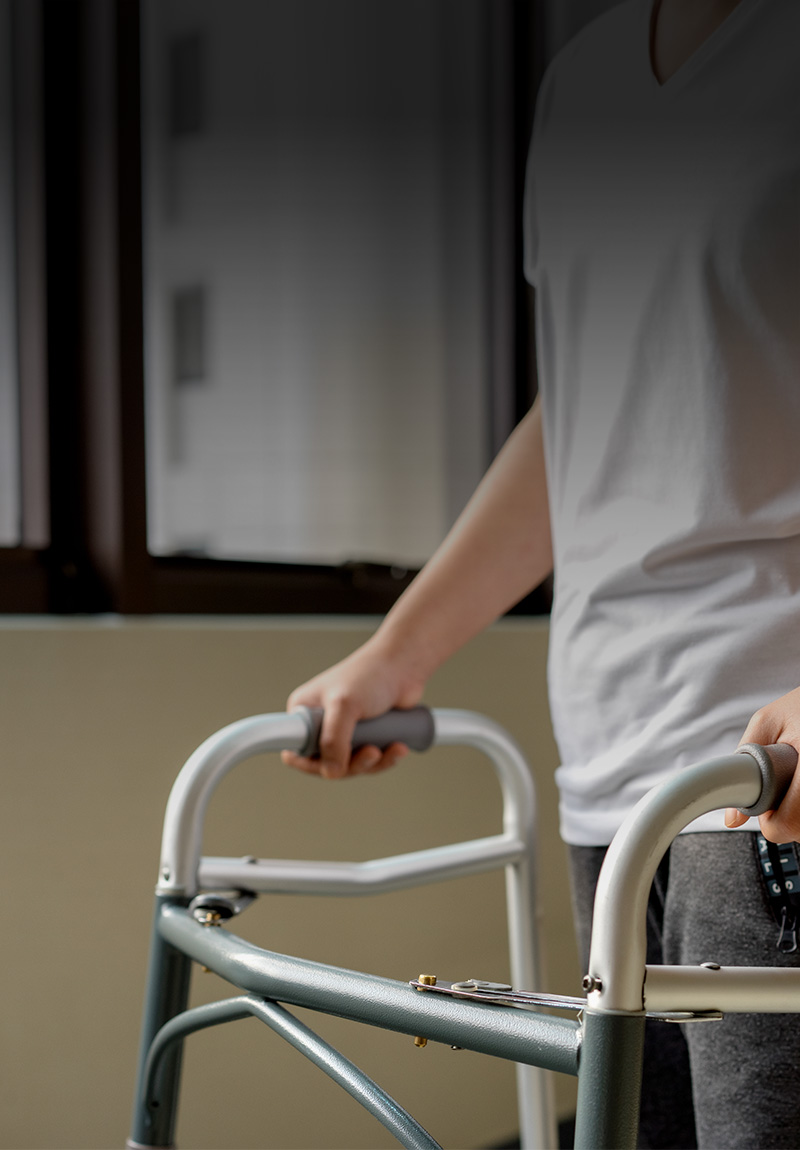
Durable medical equipment (DME) is a category of medical devices designed to assist individuals with disabilities, injuries, or chronic health conditions. These devices are prescribed by healthcare professionals and intended for long-term or repeated use to support recovery, improve mobility, and reduce pain. These tools play a critical role in orthopedic care, especially after injury or surgery.
At OrthoNY, we provide a full range of high-quality DME solutions available directly through our clinics for your convenience. Our fellowship-trained providers may prescribe items such as wrist and ankle braces, knee immobilizers, walking boots, shoulder slings, crutches, canes, and walkers, each selected to meet your individual needs. Once a device is recommended, our experienced team ensures it is properly measured and fitted. We take time to show you how to use it, make necessary adjustments for comfort, and answer any questions. A well-fitted device is essential not only for support but also for your safety and healing.
We also handle the administrative side of care. Our staff works directly with our authorization team to verify coverage on products that require pre-authorization and manage all necessary documentation, so you can focus on healing rather than paperwork. Because our DME services are offered in-house, you don’t have to make a separate trip to a medical supply store or wait for third-party shipments. Whether you need a mobility aid to stay active during recovery or a brace to protect a joint as it heals, OrthoNY ensures you have access to the right equipment, the right fit, and the right support every step of the way. It is recommended that our patients familiarize themselves with their insurance DME coverage prior to any office visit.
5 Benefits of Receiving Durable Medical Equipment at OrthoNY
- Devices prescribed and overseen by orthopedic specialists who understand your condition
- Professional measurement and fitting for comfort and effectiveness
- Convenient on-site inventory of braces and mobility aids
- Assistance with insurance verification and documentation
- High-quality, physician-approved equipment designed for long-term use

A Smarter Choice than a Hospital
OrthoNY’s surgery centers are designed specifically for orthopedic care, giving patients a focused alternative to traditional hospitals. Our model emphasizes safety, efficiency, and long-term outcomes.
- AAAHC-accredited centers meeting top safety standards
- 80% of U.S. surgeries performed in outpatient centers
- Lower costs than hospital-based orthopedic surgery
- Minimally invasive surgery by fellowship-trained surgeons
- Faster recovery, shorter waits, and lower infection risk
If surgery is your next step for care, ask your provider if an ASC setting is right for you.
Patient Testimonials
Awesome

George Smith
June 5th 2026
George Smith
June 5th 2026
Delightful and professional right as he came in the door. I am very comfortable with him and the shots he gave my painful thumb joint are working so far!!! A+
Patti Conroy
June 5th 2026
Patti Conroy
June 5th 2026
Dr. Okoli took the time to explain everything thoroughly and addressed all of my concerns. I’ve been a patient of his for well over a year and highly recommend him.
Wendy Vavrina
June 5th 2026
Wendy Vavrina
June 5th 2026
I searched orto ny doctors for my problem,and chose dr. Boyd and very happy I did. Both Dr. Boyd and his assistant Whitney extremely nice and easy to talk with and Dr …
John Rutkey
June 5th 2026
John Rutkey
June 5th 2026
Chelsea Blaney delivered professional and caring service.
A Welty
June 5th 2026
A Welty
June 5th 2026
Love pa Owen he has a great personality and makes you feel great. He explains everything to you clearly.
mary pailley
June 5th 2026
mary pailley
June 5th 2026
The staff was great.
MockingBird
June 5th 2026
MockingBird
June 5th 2026
Melissa Manus is the best. She always answers any questions and concerns I may have. My son has received the best care from OrthoNY!
Beth Haverly
June 5th 2026
Beth Haverly
June 5th 2026
His office has been great I had rotator cuff surgery and right from the beginning everyone has been very helpful. Dr. LaRosa took the time to explain everything to me even after …
Stacy Peek
June 5th 2026
Stacy Peek
June 5th 2026
Easy in, easy check-in Seen on time to see the doctor Dr Flick is A+. He did my shoulder a few years ago and remembers me and my shoulder. He’s just a …
Bill Reinhardt
June 4th 2026
Bill Reinhardt
June 4th 2026
Frequently Asked Questions
What is durable medical equipment?
Durable medical equipment (DME) is a broad category of tools and devices that are designed for long-term or repeated use in the home. DME helps people manage injuries, recover from surgery, or cope with chronic conditions by providing support, stability, pain relief, or mobility assistance. Examples include hard and soft braces for joints, immobilizers and slings, walking boots, crutches, canes, and walkers. Unlike disposable supplies, these items are constructed to withstand daily wear and tear. Your orthopedic provider prescribes DME based on your diagnosis and functional needs.
Do I need a prescription to obtain a brace or other device?
Yes, a prescription is required for most durable medical equipment. During your appointment, your orthopedic surgeon or physician assistant will evaluate your condition and determine whether a device is necessary. They will specify the type of brace or mobility aid, the length of time it should be used, and any special features, such as adjustable hinges or off-loading pads. This information is critical not only for ensuring the device fits and functions properly but also for obtaining insurance authorization. Without a prescription, insurers may deny coverage, and you may end up with a device that does not address your specific medical needs.
Will my insurance cover durable medical equipment?
Insurance coverage for DME depends on your specific plan, the device prescribed, and the medical necessity of the equipment. Some plans may cover the full cost of braces and mobility aids when they are ordered by a physician, while others may require pre-authorization or impose limits on frequency or duration of use. For those products that require pre-authorization, our authorization specialists will contact your insurance company to verify benefits, obtain required approvals, and determine any co-payments or deductibles. We’ll review the financial details with you before supplying the equipment, so there are no surprises. If you do not have coverage or are paying out of pocket, we can discuss options such as a payment plan.
How do I know if my brace or boot fits correctly?
Proper fit is crucial for a brace or boot to do its job. During your fitting, our staff will follow the appropriate bracing guidelines for determining the correct size and adjust straps, pads, and hinges to conform to your anatomy. A well-fit device should feel snug but not painfully tight; it should immobilize or support the intended joint without causing numbness, redness, or skin irritation. You should be able to move and walk comfortably if appropriate. We will teach you how to put the device on correctly and how to clean the brace or boot. If you notice pressure points, rubbing, slipping, or unexpected pain after you begin wearing it, contact us immediately to schedule a re-fitting or adjustment.
Can I rent mobility aids instead of purchasing them?
Yes, however, rentals are not an option at OrthoNY. We can refer you to an outside medical supply company for your rental needs. Crutches, canes, standard walkers, and rollators are often available on a rental basis if you need them for a short period of time, such as recovering from a fracture or post-operative weight-bearing restrictions. Rental agreements typically include a monthly fee and require that the equipment be returned in good condition. Customized or fitted devices like hinged knee braces, custom orthotics, or walking boots are usually purchased because they are tailored to your body and cannot be reused safely by others.
How long should I use my brace or assistive device?
The duration of use depends on your diagnosis, the type of device, and how quickly you heal. Some braces are worn only during physical activity or for a few weeks after injury, while others may be used around the clock for several months. Post-surgical devices like immobilizers or walking boots are typically weaned off as the operative site heals and strength returns. Your provider will outline a schedule that may include a gradual reduction in wear time or transition to a less restrictive device. Regular follow-up appointments allow us to assess your progress, ensure the equipment is still appropriate, and modify the plan as needed. Never discontinue a prescribed device without consulting your orthopedic specialist.