
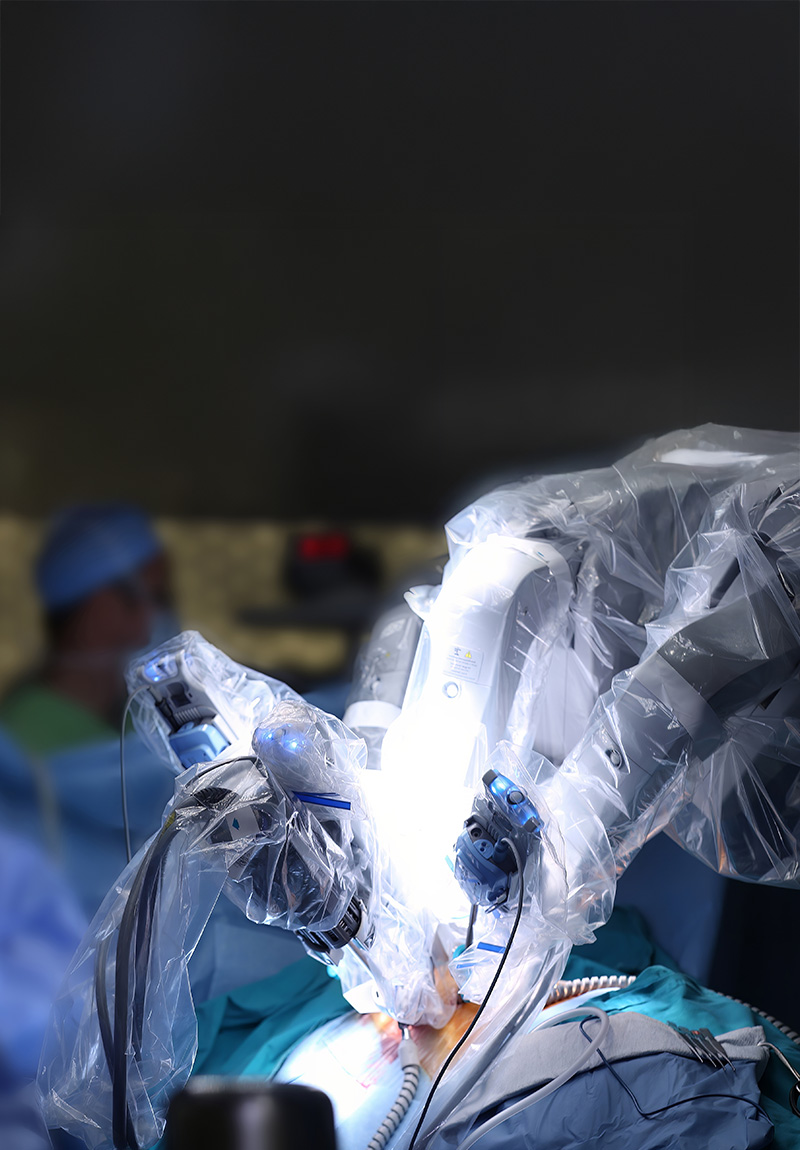
Precision Surgery for Optimal Outcomes
Robotic-assisted orthopedic surgery uses advanced technology to improve the accuracy and customization of joint and spine procedures. These systems provide surgeons with a high-definition 3D view of the anatomy and real-time intraoperative guidance, allowing for extremely precise bone preparation and implant placement.
At OrthoNY, we use robotic platforms for total knee and partial knee replacements, as well as select spine surgeries. Before surgery, a CT scan of the joint is used to create a virtual 3D model. This model helps our surgeons determine the ideal size, position, and alignment of an implant. During the procedure, a robotic arm assists with executing the plan to within a fraction of a millimeter, while the surgeon remains in complete control. The system also enhances safety by preventing surgical instruments from moving outside the pre-planned boundaries, helping to protect surrounding tissues. For patients, this can result in better-fitting implants, improved joint function, less trauma to soft tissue, and potentially a faster, more comfortable recovery. Not every procedure requires robotic assistance, but for patients with complex anatomy or those seeking a highly personalized fit, it can offer significant benefits. Our surgeons will thoroughly evaluate each condition and help determine whether robotic-assisted surgery is the right choice.
5 Benefits of Robotic-Assisted Surgery at OrthoNY
- Highly accurate implant placement and bone preparation within a fraction of a millimeter
- Personalized surgical planning based on your individual anatomy
- Protection of soft tissues through boundaries set by the robotic system
- Potential for less pain, smaller incisions, and quicker recovery compared to traditional techniques
- Performed by fellowship-trained surgeons experienced in both conventional and robotic methods
Robot Types
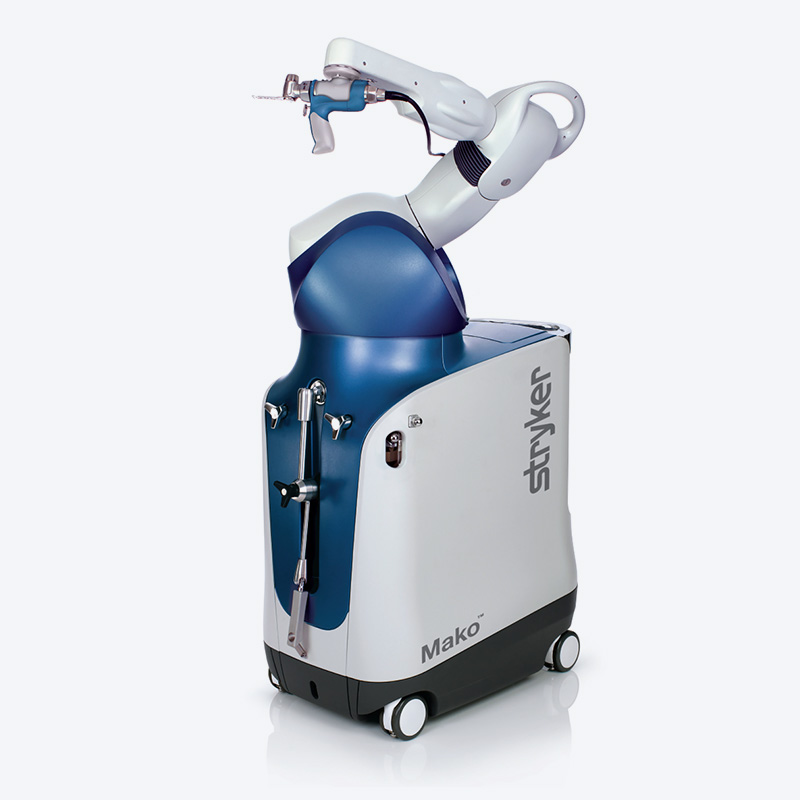
Mako Robotic-Assisted Surgery
With a 3D CT scan and surgeon-guided robotic arm, Mako helps create a customized plan for hip and knee replacements. The Mako robot is used for knee procedures at OrthoNY Surgical Suites in Clifton Park.
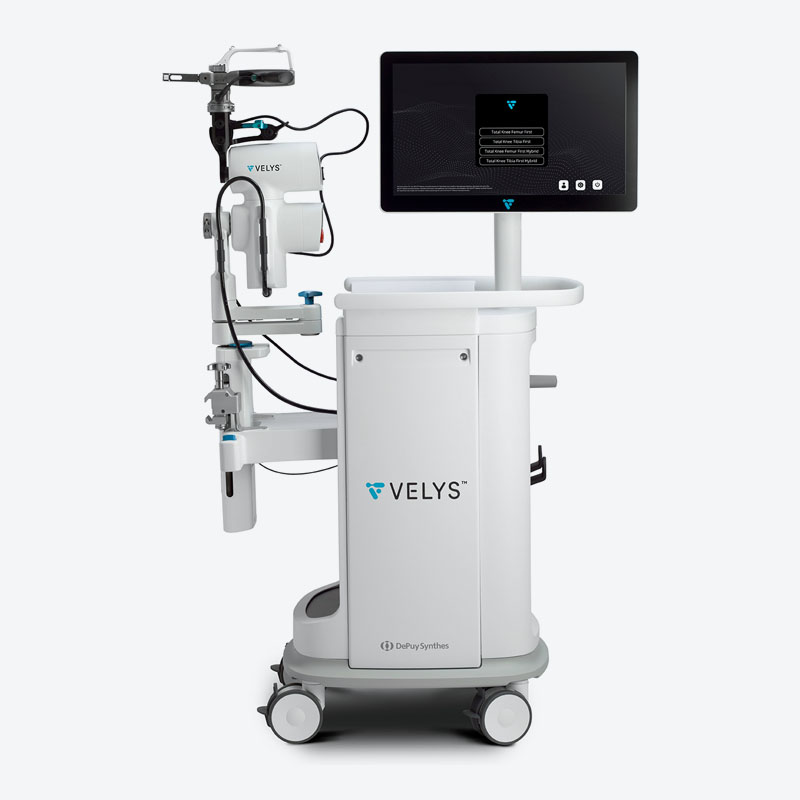
VELYS Robotic-Assisted Solution
VELYS robotic technology uses real-time surgical data and advanced imaging to guide precise knee implant placement with surgeon-controlled accuracy. The Velys solution is available for procedures at Everett Road Surgery Center.

A Smarter Choice than a Hospital
OrthoNY’s surgery centers are designed specifically for orthopedic care, giving patients a focused alternative to traditional hospitals. Our model emphasizes safety, efficiency, and long-term outcomes.
- AAAHC-accredited centers meeting top safety standards
- 80% of U.S. surgeries performed in outpatient centers
- Lower costs than hospital-based orthopedic surgery
- Minimally invasive surgery by fellowship-trained surgeons
- Faster recovery, shorter waits, and lower infection risk
If surgery is your next step for care, ask your provider if an ASC setting is right for you.
Patient Testimonials
My visit to Ortho went well. I was able to find relief after I saw the Dr for my back pain. The medicine seems to be working which I’m grateful for.

Joseph Curry
June 6th 2026
Joseph Curry
June 6th 2026
Excellent experience. Got appointment that suited me and the wait time was minimal. Really liked the nurses and the doctor I saw. Quick x-rays and quick diagnosis.
Kevin Andolina
June 6th 2026
Kevin Andolina
June 6th 2026
Rachel was professional and very thorough. Set a plan in motion as well
Henry E
June 6th 2026
Henry E
June 6th 2026
Dr. Ansari explains what is happening with your experience and what will be done next allowing you to understand your problems and how they can be addressed. I have compete confidence in …
Edward Nestler
June 6th 2026
Edward Nestler
June 6th 2026
Dr. Okoli was the best! His personality had alot to do with my choice of hand/wrist surgeon. Along with his expertise of course. Thank you!!!
Diane Cash
June 6th 2026
Diane Cash
June 6th 2026
So far so good, 5 days post surgery for a torn bicep tendon. Dr. Stein and his team have been great since the injury. Highly recommend Ortho NY and Dr. Stein.
dan white
June 6th 2026
dan white
June 6th 2026
I have been seeing Chris W for about 4 years for my cortisol shots. He is extremely knowledgeable, friendly and I feel that he listens to me and when/if the time comes …
Cheryl Hildenbrandt
June 6th 2026
Cheryl Hildenbrandt
June 6th 2026
Rebecca was very helpful. My pain is gone. Thank youuuuu
Marybeth Santoro
June 6th 2026
Marybeth Santoro
June 6th 2026
Very professional, thorough, to the point.
Thomas & Maria Klein
June 5th 2026
Thomas & Maria Klein
June 5th 2026
Dr Parikh is the best of the best, intelligent and always kind. I would never hesitate to refer him to my family and friends.
mary bolognino
June 5th 2026
mary bolognino
June 5th 2026
Frequently Asked Questions
What is robotic-assisted surgery?
Robotic-assisted surgery is an innovation that augments, rather than replaces, the skill of a surgeon. In orthopedic applications, a robotic system consists of a mechanical arm, sensors, and a computer console. Before surgery, detailed imaging, often a CT scan, is used to create a 3D model of the joint or spine. The surgeon uses this model to plan the precise bone cuts and implant positioning. During the procedure, the robotic arm guides the surgeon’s instruments according to the pre-planned parameters, providing real-time feedback on alignment, depth, and orientation. Importantly, the robot does not operate independently, as the surgeon controls every movement and can adjust the plan as needed. The system’s sensors enforce boundaries to prevent the instruments from moving outside the safe zone, helping to protect surrounding soft tissues. The result is a highly accurate procedure tailored to each patient’s anatomy.
Which orthopedic procedures use robotic assistance at OrthoNY?
At present, OrthoNY employs robotic technology for several types of joint and spine surgeries. Total and partial knee replacement procedures utilize robotic arms to refine bone cuts and ensure the implant is positioned within a fraction of a millimeter. Partial hip replacement can benefit from robotic guidance in preparing the acetabulum (hip socket) and femur, optimizing leg length and cup orientation to reduce dislocation risk. In the spine, robotic navigation assists with the placement of pedicle screws and other hardware, particularly in complex deformity or revision cases. We continually evaluate emerging technologies and will expand our robotic offerings as evidence supports their safety and effectiveness. Not all procedures require robotic assistance, and the surgeon will discuss whether this technology is recommended based on anatomy, diagnosis, and personal goals.
How does robotic-assisted surgery differ from traditional joint replacement?
Traditional joint replacement surgery is performed using handheld instruments and alignment guides. Robotic-assisted surgery enhances precision by integrating pre-operative 3D planning with intra-operative guidance. Using CT-based models, surgeons determine the optimal size, orientation, and placement of the implant before entering the operating room. During the procedure, the robotic arm helps the surgeon make bone cuts and prepare the joint exactly according to this plan. The system’s boundaries prevent deviation from the planned angles or depths, and sensors provide feedback on soft-tissue tension, enabling more accurate ligament balancing. This level of precision can improve joint alignment and stability, potentially resulting in better implant longevity, improved function, and less post-operative pain. However, the surgeon remains in control and can adjust intraoperatively if unexpected findings arise.
Is robotic surgery safe?
Robotic-assisted procedures have a strong safety record. The systems we use are approved by the U.S. Food and Drug Administration (FDA) and have been extensively evaluated in clinical studies. By improving accuracy, robotic assistance may reduce certain complications, such as implant malposition, leg length discrepancy, or unbalanced ligaments, that can lead to pain or early implant failure. Like any surgery, there are inherent risks of infection, blood clots, injury to nerves or blood vessels, anesthesia-related complication,s and the possibility of needing further surgery in the future. The robotic component does not introduce new risks; instead, it serves as a sophisticated tool under the surgeon’s control. Our surgical team has undergone specialized training with the technology and follows stringent protocols to ensure patient safety before, during, and after the procedure.
Who is a candidate for robotic-assisted joint replacement?
Robotic assistance can benefit a broad range of patients undergoing joint replacement, but it may be particularly helpful for certain individuals. Candidates typically have symptomatic knee or hip arthritis that has not improved with non-operative treatments. Patients with unusual bone anatomy, previous fractures or hardware, deformities, or ligament laxity may gain more accurate implant alignment from robotic guidance. Those who value a personalized approach and the potential for enhanced precision often choose robotic assistance. However, some factors, such as poor bone quality, severe obesity, or medical conditions that increase surgical risk, may influence whether robotic technology is recommended. A comprehensive evaluation, including medical history, physical examination, X-rays, and sometimes CT scans, will allow your surgeon to determine if a candidate is the right fit for a robotic-assisted procedure.
What are the benefits of robotic-assisted surgery for patients?
Robotic technology offers several potential advantages. The enhanced accuracy of bone preparation and implant placement may lead to better joint alignment, which is associated with improved function and longer implant lifespan. Precise cuts and soft-tissue protection can reduce bleeding and trauma to surrounding muscles and ligaments, resulting in less post-operative pain and swelling. Smaller, more precisely located incisions may also mean smaller scars. For many patients, knowing that their surgery is guided by advanced technology provides reassurance and confidence. It’s important to remember that successful outcomes also depend on the surgeon’s expertise, adherence to post-operative instructions, and participation in rehabilitation.