If you’re reading this, you’ve probably scheduled an orthobiologic procedure at OrthoNY, or you’re seriously considering one: platelet-rich plasma (PRP), bone marrow concentrate (BMAC), or a microfragmented fat procedure. You’ve likely spent hours researching the treatment itself and almost no time thinking about what you’ll be eating for the next six weeks.
That’s the part I’d like to change. What happens on your plate between now and your follow-up visit influences your outcome more than most patients realize.
Your Body Is Building New Tissue
Here’s the mental picture I want you to hold onto: an orthobiologic procedure is not a repair. It’s a construction project.
When we concentrate your platelets or bone marrow and place them into an injured tendon, ligament, or joint, we’re delivering a signal, a very specific set of instructions telling your body, “Build here. Build now.” Growth factors flood the area, cells get recruited, and a repair site opens for business.
But signals aren’t materials. Hand a contractor blueprints, a skilled crew, and an empty lot with no lumber, and that house isn’t getting built. Not because the plan was bad. Because the supply truck never showed up.
Your nutrition is the supply truck. Every bit of new collagen, every rebuilt fiber of tendon, gets assembled from raw material you personally ate. There is no other source. And this is a slower project than most people expect: tendon and ligament tissue remodels over months, not days, so think of the weeks ahead as keeping a job site stocked through a long build.
Protein: The Foundation and the Framing
If nutrition is the supply truck, protein is the lumber, the single most important thing on the manifest. Connective tissue is largely collagen, and collagen is a protein your body reassembles from amino acids at the repair site. Skimp on protein, and you’ve got a crew standing around a half-framed house waiting on a delivery.
A few amino acids deserve special mention, because different parts of the build call for different materials:
- Glycine and proline are the two-by-fours, concentrated in collagen-rich foods like bone broth, slow-cooked meat, skin-on poultry, and collagen peptide powders.
- Leucine is the foreman. It flips the switch that tells your cells to start building, and it’s abundant in dairy, eggs, meat, fish, and soy. Spreading protein across your meals, rather than loading it all into dinner, flips that switch several times a day instead of once.
- Arginine helps run the utility lines, supporting the blood flow a repair site needs to receive oxygen and nutrients. Nuts, seeds, poultry, and legumes are solid sources.
How Much Protein Do You Actually Need for Recovery?
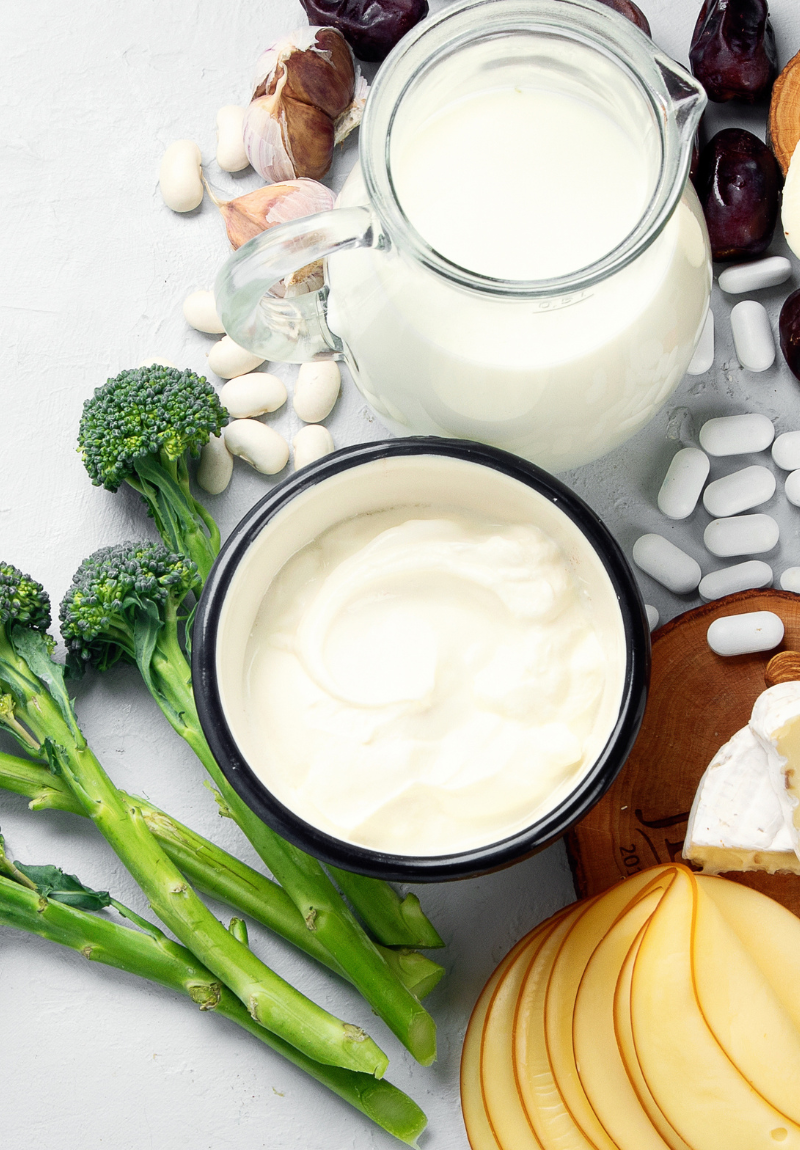
General healthy-adult guidelines land around 0.8 grams of protein per kilogram of body weight per day, but that’s a floor for maintenance, not a target for construction. During active healing, research on connective tissue recovery generally supports 1.2 to 2.0 grams per kilogram daily, roughly 0.5 to 0.9 grams per pound. For a 160-pound person, that’s about 90 to 140 grams a day: a few eggs at breakfast, a palm-sized portion of chicken or fish at lunch and dinner, and Greek yogurt or cottage cheese as a snack gets you most of the way there.
One timing note: taking about 15 grams of collagen peptides with vitamin C roughly 30 to 60 minutes before rehab exercise may boost collagen synthesis in loaded tissue, a low-risk habit that delivers materials right when the job site is most active.
Run your specific numbers by your provider, particularly if you have kidney disease or any condition where protein intake needs managing.
Vitamins, Minerals, and Water: The Crew and the Job Site
Lumber alone doesn’t build a house. Your micronutrients and hydration are the workers, tools, and working conditions.
- Vitamin C is the nail gun; without it, your body cannot cross-link collagen into strong, organized fibers. Citrus, bell peppers, strawberries, and broccoli are excellent sources, and many providers suggest 500 to 1,000 mg daily during active healing.
- Vitamin D is the site supervisor, influencing bone health, muscle function, and immune signaling. Deficiency is common, especially in northern climates, and worth testing rather than guessing at.
- Zinc runs the tool crib and is required for protein synthesis and cell division; low zinc is linked to slower wound healing. Oysters, beef, and pumpkin seeds deliver it well, with 15 to 30 mg daily a common supplemental range (don’t megadose, since excess zinc interferes with copper absorption).
- Magnesium keeps the lights on, supporting hundreds of enzymatic reactions and sleep quality. Leafy greens, nuts, and seeds are good sources.
- Omega-3 fatty acids keep inflammation productive rather than chaotic; fatty fish two or three times a week covers this.
Then there’s water, the most underrated item on this list. Cartilage, discs, and connective tissue are largely water, and your circulatory system is the delivery road carrying nutrients to the repair site. Dehydration is a traffic jam on that road. Use pale-yellow urine as your daily gauge, and drink more on hot days, training days, and the days surrounding your procedure.
Foods and Habits That Slow the Build
Just as important as what you’re adding is what you’re clearing out of the way. Some things don’t just fail to help; they actively work against the project.
- Alcohol is the crew calling in sick. It impairs protein synthesis, disrupts deep sleep, and dehydrates you. Most protocols ask patients to skip it entirely for at least a week around the procedure.
- Refined sugar and ultra-processed foods are cheap, warped lumber. High sugar intake drives oxidative stress and promotes low-grade inflammation, exactly the environment you don’t want while new tissue is forming.
- Fried foods and heavy seed oils tip your fatty acid balance in a pro-inflammatory direction. Favor olive oil, avocado, and fish over the deep fryer.
- NSAIDs aren’t food, but patients ask constantly. Ibuprofen, naproxen, and similar anti-inflammatories blunt the inflammatory cascade, precisely the cascade your orthobiologic treatment is trying to trigger. Follow your provider’s specific instructions on timing, and ask what you can use for pain relief instead.
Sleep and Movement Matter Too
Nutrition doesn’t work alone. Sleep is when the night shift works: growth hormone release peaks during deep sleep, and that’s when much of your repair happens. Short or fragmented sleep raises cortisol and slows healing. Seven to nine hours, a consistent bedtime, and screens out of the last hour is unglamorous, free, and one of the highest-leverage things you can do for your outcome.
Movement tells the crew where to build. New collagen needs mechanical load to know which direction to lay down fibers. Appropriately dosed, progressive rehab turns a disorganized pile of new tissue into a functional tendon. Complete rest doesn’t accelerate healing; it just produces weaker tissue. Showing up for rehab isn’t optional homework. It’s part of the treatment.
The Bottom Line
An orthobiologic procedure hands your body a blueprint and a construction crew, and asks it to do what it already knows how to do, just faster and more effectively than it would alone.
Eat enough protein, spread across your day. Cover your vitamin C, D, zinc, and magnesium. Drink your water. Ease off the alcohol and sugar. Sleep like it’s part of the treatment plan, because it is. Move the way your provider tells you to.
None of it is complicated. All of it compounds. And it’s the part of the process that’s entirely, refreshingly in your hands. If you have questions about how to fuel your specific recovery, talk to your OrthoNY care team before your procedure, not after.